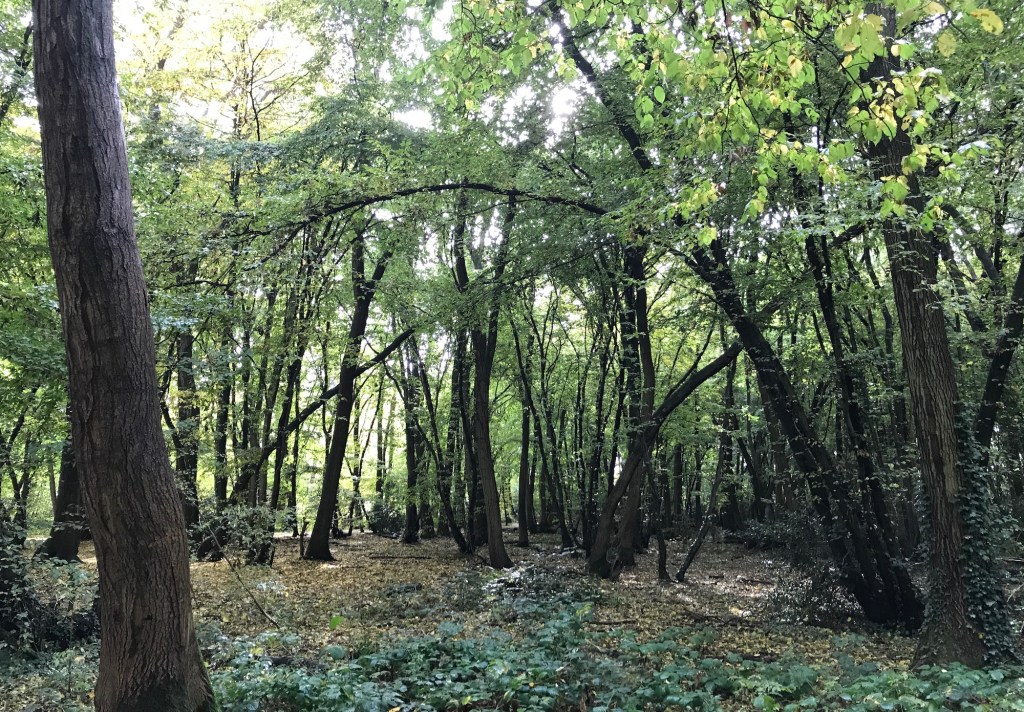
Birchanger Wood consists of 69 acres of ancient coppiced woodland – hornbeam, hazel, ash, birch, oak, sweet chestnut, cherry, holly, and a wide range of flora including English bluebells, wood anemones and golden saxifrages. The wood is maintained entirely by volunteers in accordance with a management plan drawn up by professional ecologists and the Forestry Commission for the benefit of local community and visitors and supported by donations from a wide range of organisations, private, public and by individuals.
Our Spring Woodland Open Day is taking place on Saturday 20th April and our compound will be open from 10am to 3pm – everyone is welcome to come along! It is a lovely time to visit the wood because the bluebells will still be in bloom and the trees will be coming into leaf.
Entry is completely free and we will have free activities for children including orienteering. The Hertfordshire Wood Turners will be here to give a demonstration of their work – and will be bringing along some of their beautiful work to sell.
You can also chat to our volunteers to find out more about the wood, the conservation work that we do, and how to get involved if you would like to play a part in protecting the wood for future generations to enjoy.
Donations will be greatly appreciated to help support our work in protecting and enhancing the wood, please bring cash if you are able to do so.
More details to follow but for now, save the date!
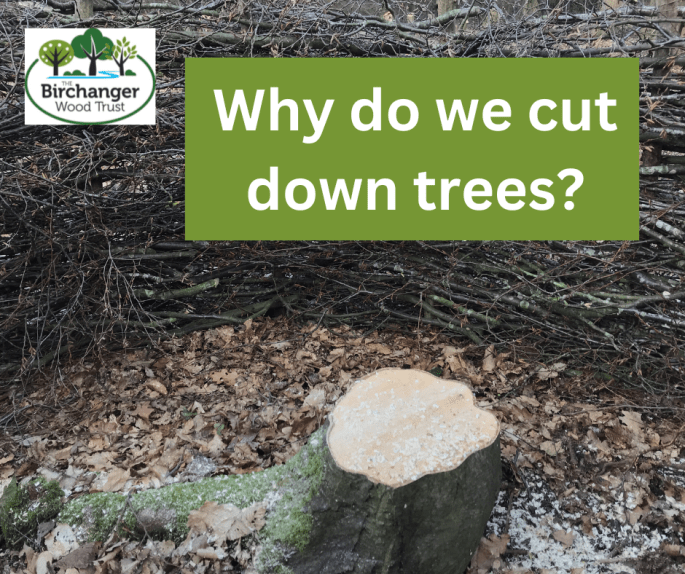
Rest assured that we NEVER cut down a tree to make firewood. We only cut down trees to protect and enhance the biodiversity of the wood, or for the safety of visitors.
There are three main reasons we might fell a tree:
As part of our coppicing plan. This is vital part of the management of the woodland to maintain and improve its biodiversity. It looks severe but is actually essential! And it can in fact prolong the life of the trees we coppice. You can read more here: https://birchangerwoodtrust.org/2023/01/26/our-new-coppicing-plan/
If a tree is damaged, for example by bad weather. To make these trees safe, or prevent them damaging other healthy trees nearby, we sometimes have to fell them.
If a tree is diseased. For example, many of our ash trees have sadly succumbed to ash dieback disease. This can leave them prone to dropping large limbs, so we cut down diseased trees if they are near to our main paths through the wood.
If you would like to be a part of protecting Birchanger Wood for future generations to enjoy, we are always looking for new volunteers! Please come along to our compound any Saturday morning at around 8.30am, or contact us to find out more.
The new 10-year Woodland Management plan for Birchanger Wood includes coppicing some key areas to let the light in and increase biodiversity. We have already made a start near our compound, which you may have seen on your walks in the wood. Read on to find out how coppicing works magic in woodlands.
What is coppicing?
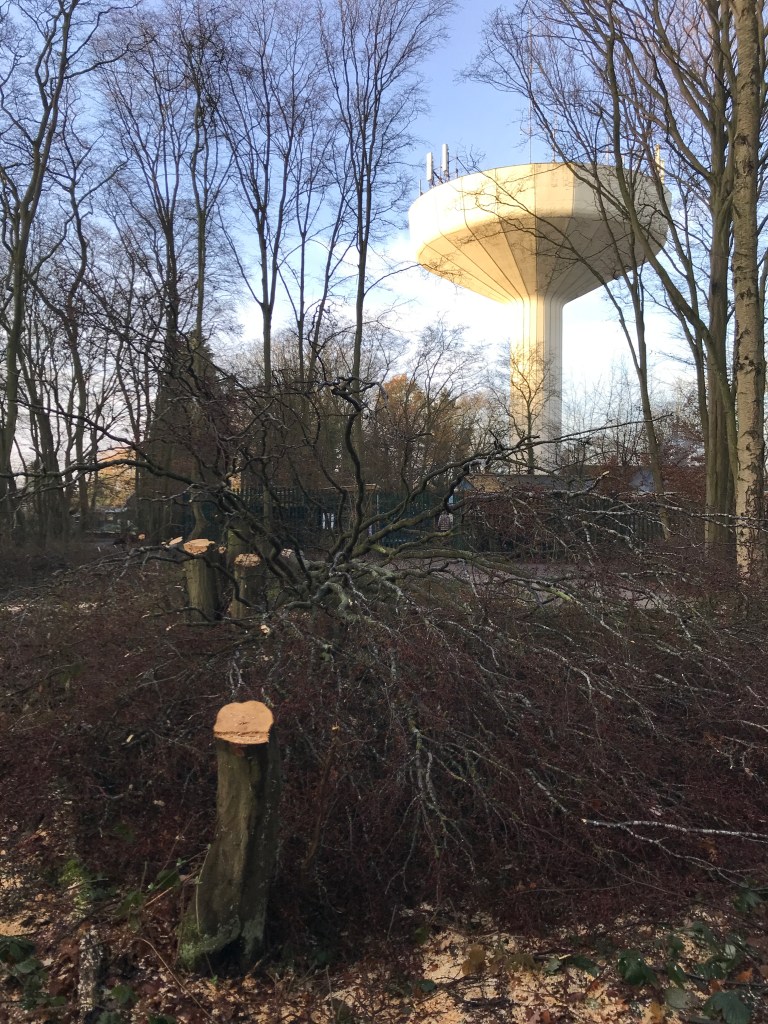
Coppicing is where a tree is cut down to its base to create a ‘stool’ from which new shoots will grow. It looks very drastic, but within a year or two the tree will be showing lots of new, strong growth.
Coppicing work under way near our compound, January 2023
In fact, coppicing can actually increase the life span of a tree! Some of the oldest trees in Britain are grown from coppice stools. They can live to an incredible age, like the amazing lime at Westonbirt Arboretum that is thought to be two thousand years old.
Coppicing has been used as a woodland management technique since the Stone Age. Coppicing made sure there was a good steady supply of firewood and timber that could be more easily harvested than felling the whole tree, and this technique would have been used at Birchanger Wood for hundreds of years. Most tree species can be coppiced but it’s especially suitable for hornbeam, which we have lots of at Birchanger, and hazel.
But times have changed – why are we still doing it today?
Coppicing has major benefits for biodiversity. After cutting the trees, light floods the woodland floor allowing smaller plants, such as wildflowers, to thrive. It also means shrubby plants like brambles can grow, which make ideal habitat and provide sources of food for small birds and other animals and insects.
Will you coppice every tree?
No. We have a plan to coppice only certain areas of the woodland (you can read that in full here) and within each area a number of mature trees – also known as ‘standards’ – will be left. Quite a few of these will be oaks. These mature trees provide another vital habitat and it is very important that we look after them, too.
What happens when the coppiced trees grow back?
As the trees regrow, the canopy slowly closes over again, reducing the light that reaches the woodland floor. This takes between five and eight years. Each area will be coppiced roughly every 20-30 years, meaning that the canopy is closed for the majority of the time. We will coppice other areas in ‘rotation’, meaning the wood will have trees at all different ages and stages of growth. This will provide the widest possible range of habitats to support the widest possible range of plants and animals.
What are the piles of dead wood for?
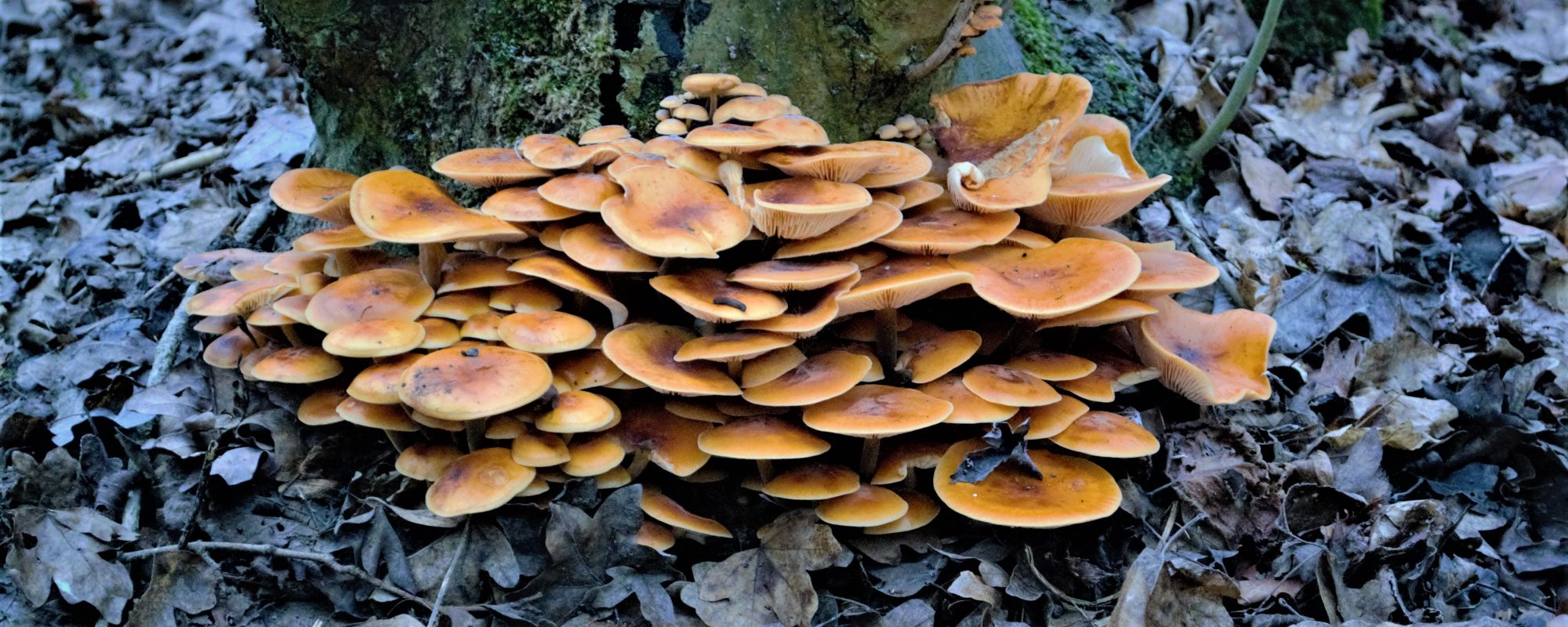
We also leave some piles of cut wood or fallen trees to decay. You may have seen these in the wood. This is not just us being too lazy to tidy up! Lots of species rely on dead wood for food and habitat – including many invertebrates and fungi. It is a vital element of a biodiverse woodland.
The latest 10-year Woodland Management Plan for Birchanger Wood was approved in December 2022. The ambitious and exciting plan sets out how the Trust will work to maintain and enhance the biodiversity of the wood in the coming years, and how it will involve the local community to make sure the woodland remains an accessible natural space for all to enjoy.
The coppicing work recommended in the Plan will help to provide habitat for small woodland birds and mammals by encouraging a ‘shrub layer’ to grow. A shrub layer is made up of younger trees, such as hazel, holly and hawthorn, which is perfect for nesting, feeding and sheltering. As the Plan notes, there is potential to provide much more of this kind of habitat at Birchanger Wood, which could make a real difference to the diversity of species that the wood supports.
Would you like to help us achieve this vision for the future of Birchanger Wood? Our volunteering sessions take place every Saturday, and even if you can only spare an hour or two we would love to hear from you. Birchanger Wood Trust is entirely run by volunteers, and many hands make light work! Please fill in our contact form and we will get back to you.



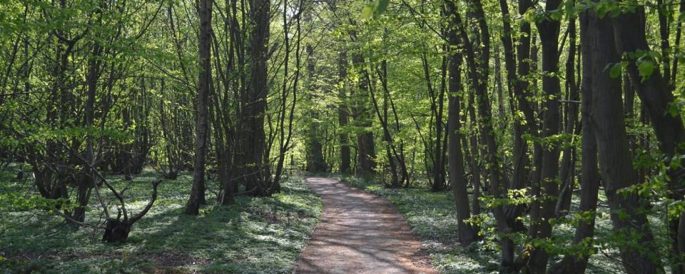
 Birchanger Wood